ACE-031
Research Hub — Aggregated Studies
MedTech Research Group aggregates published research from peer-reviewed journals, clinical trials, and academic institutions. We do not conduct original research. All studies cited below are the work of their respective authors and institutions. Sources are linked for verification.
This product is designated FOR RESEARCH USE ONLY (RUO). These compounds have not been approved or cleared under 21 U.S.C. § 505 and have not been evaluated by the FDA for safety, efficacy, or labeling for clinical, diagnostic, or therapeutic use in humans or animals.
MedTech Research Group will only fulfill orders to qualified researchers affiliated with accredited academic institutions, licensed research facilities, or organizations with active IRB/IACUC oversight.
Purchaser Restrictions
- Purchaser must be a qualified researcher at an accredited institution or licensed research facility
- This product may not be sold or redistributed to individual consumers, wellness clinics, health food stores, or retail establishments
- Not intended for human or animal consumption, diagnostic use, or therapeutic application
- Institutional affiliation and research purpose will be verified prior to order fulfillment
Distribution is limited to qualified research use in compliance with applicable federal and state law. These products bear the "For Research Use Only" designation per FDA labeling requirements (minimum 10 pt. font). Ref: 21 U.S.C. § 505; FD&C Act § 201(p) (unapproved new drug definition).
| Risk Tier | YELLOW |
| Category | Growth Factors |
| Subcategory | Broad-Spectrum TGF-B Superfamily Inhibition |
| Pharmacological Class | Recombinant Fusion Protein |
| Subclass | Activin Receptor Type IIB (ActRIIB) Decoy / Ligand Trap |
| Molecular Type | Soluble ActRIIB-Fc Fusion Protein (extracellular domain of ActRIIB fused to human IgG1 Fc domain) |
| Origin | Synthetic recombinant — developed by Acceleron Pharma (now Merck) |
| Regulatory Status | Research Use Only. Clinical trials conducted for Duchenne Muscular Dystrophy (Phase 2) but halted due to safety signals (epistaxis, telangiectasias). Not FDA-approved. |
| Route of Administration | Subcutaneous injection |
| Reconstitution | Lyophilized powder; reconstitute with bacteriostatic water |
| Storage | Refrigerate (2-8°C) |
Description
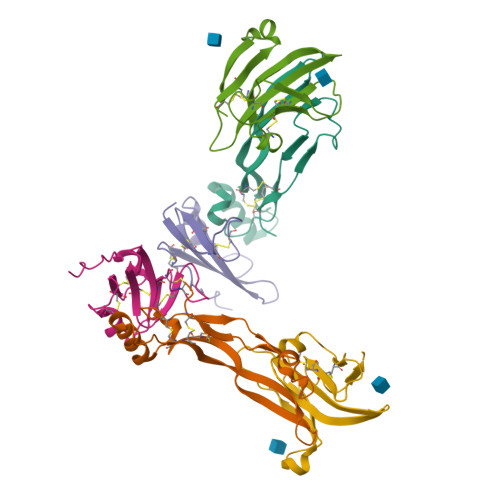
ACE-031 is a soluble fusion protein consisting of the extracellular ligand-binding domain of the human Activin Receptor Type IIB (ActRIIB) fused to the Fc domain of human IgG1. This design creates a circulating "decoy receptor" or "ligand trap" that binds and neutralizes multiple TGF-B superfamily ligands that normally signal through the ActRIIB receptor. Unlike the myostatin propeptide (which specifically targets myostatin), ACE-031 is a broad-spectrum trap that captures myostatin, activin A, activin B, GDF-11, and other TGF-B family members that bind ActRIIB. This broader inhibition profile produces more robust effects on muscle mass than myostatin-specific approaches, precisely because it blocks the compensatory signaling from other TGF-B ligands that can maintain muscle-inhibitory signaling even when myostatin alone is neutralized.
In preclinical studies, ACE-031 produced dramatic increases in muscle mass — significantly greater than myostatin-specific approaches — along with reductions in adiposity and improvements in bone mineral density. The Fc fusion provides an extended half-life (approximately 2 weeks) through FcRn-mediated recycling, allowing infrequent dosing. Acceleron Pharma advanced ACE-031 into Phase 2 clinical trials for Duchenne Muscular Dystrophy (DMD) in boys aged 4-15. The trial was halted in 2011 due to safety signals: minor nosebleeds (epistaxis) and small dilated blood vessels (telangiectasias) on the skin and gums. These vascular effects are thought to be related to the broad ligand-trapping activity, as some ActRIIB ligands (particularly BMP-9 and BMP-10) play critical roles in vascular endothelial integrity and angiogenesis regulation.
Clinical Context
ACE-031 represents the most potent approach to anti-myostatin/muscle-growth-promoting therapy in this catalog, but the clinical trial safety signal is an important consideration. The vascular effects (epistaxis, telangiectasias) are directly attributable to the broad-spectrum nature of ActRIIB ligand trapping — BMP-9 and BMP-10, which are inadvertently captured, are essential for vascular maintenance. This is a cautionary example of how broader target engagement can produce greater efficacy but also unexpected toxicity. Acceleron/Merck subsequently developed more selective approaches (luspatercept/Reblozyl, an ActRIIA-Fc fusion approved for anemia). ACE-031 itself remains a research tool.
- SAFETY SIGNAL: Clinical trials halted due to epistaxis and telangiectasias — vascular effects from BMP-9/BMP-10 trapping
- Broader TGF-B inhibition than myostatin propeptide — more potent but more off-target effects
- BMP-9 and BMP-10 trapping disrupts vascular endothelial maintenance — clinically manifests as nosebleeds and spider veins
- Long half-life (~2 weeks) from Fc fusion means adverse effects are sustained once they appear
- Higher cost ($71.25/1mg) reflects fusion protein complexity
- Not equivalent to myostatin-specific inhibition — different risk-benefit profile
- Contraindicated in patients with bleeding disorders, vascular fragility, or hereditary hemorrhagic telangiectasia
Published Research
Published Research & Clinical Data
Peer-reviewed studies and clinical trial data related to ACE-031
All research below is conducted by independent institutions. MedTech Research Group provides these references for informational purposes only.
Research citations are being compiled for this compound.
Check back soon — our team is curating peer-reviewed sources.