Cagrilintide / Semaglutide
Cagrilintide / Semaglutide Combinations
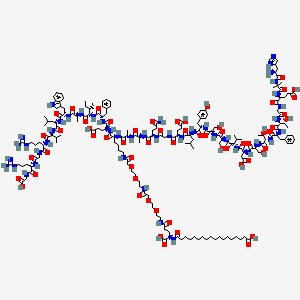 Semaglutide
Blend components — PubChem
Research Hub — Aggregated Studies
MedTech Research Group aggregates published research from peer-reviewed journals, clinical trials, and academic institutions. We do not conduct original research. All studies cited below are the work of their respective authors and institutions. Sources are linked for verification.
This product is designated FOR RESEARCH USE ONLY (RUO). These compounds have not been approved or cleared under 21 U.S.C. § 505 and have not been evaluated by the FDA for safety, efficacy, or labeling for clinical, diagnostic, or therapeutic use in humans or animals.
MedTech Research Group will only fulfill orders to qualified researchers affiliated with accredited academic institutions, licensed research facilities, or organizations with active IRB/IACUC oversight.
Purchaser Restrictions
- Purchaser must be a qualified researcher at an accredited institution or licensed research facility
- This product may not be sold or redistributed to individual consumers, wellness clinics, health food stores, or retail establishments
- Not intended for human or animal consumption, diagnostic use, or therapeutic application
- Institutional affiliation and research purpose will be verified prior to order fulfillment
Distribution is limited to qualified research use in compliance with applicable federal and state law. These products bear the "For Research Use Only" designation per FDA labeling requirements (minimum 10 pt. font). Ref: 21 U.S.C. § 505; FD&C Act § 201(p) (unapproved new drug definition).
| Risk Tier | ORANGE |
| Category | Metabolic / Weight Management |
| Subcategory | Dual-Action Appetite and Glycemic Control |
| Pharmacological Class | Dual Peptide Hormone Analog Combination |
| Subclass | GLP-1 Receptor Agonist + Amylin Receptor Agonist |
| Molecular Type | Combination of two modified peptides — Cagrilintide (acylated amylin analog) + Semaglutide (acylated GLP-1 analog) |
| Origin | Both synthetic; Cagrilintide is an analog of endogenous amylin, Semaglutide is an analog of endogenous GLP-1 |
| Regulatory Status | Investigational. CagriSema is in Phase 3 trials by Novo Nordisk (filed for FDA approval 2024). Not yet FDA-approved as a combination product. |
| Route of Administration | Subcutaneous injection |
| Reconstitution | Lyophilized powder; reconstitute with bacteriostatic water |
| Storage | Refrigerate (2-8°C) before and after reconstitution |
Description
Cagrilintide is a long-acting analog of amylin, a 37-amino-acid peptide hormone co-secreted with insulin from pancreatic beta cells in response to meals. Amylin works through receptors in the area postrema and other brain regions to slow gastric emptying, suppress post-meal glucagon secretion, and promote satiety. Native amylin has a very short half-life (approximately 13 minutes), making it impractical for therapeutic use. Cagrilintide has been engineered with acylation (a C-18 fatty diacid side chain) to extend its half-life to approximately 7 days, enabling once-weekly dosing — the same pharmacokinetic strategy used in semaglutide.
When combined with semaglutide, cagrilintide creates a dual-agonist approach that targets two distinct but complementary appetite and glucose regulation pathways simultaneously. GLP-1 receptor agonism (from semaglutide) drives insulin secretion, suppresses glucagon, and acts on hypothalamic appetite centers. Amylin receptor agonism (from cagrilintide) provides an additive effect on gastric emptying, glucagon suppression, and satiety signaling through different neuronal circuits. In Novo Nordisk's REDEFINE Phase 3 trials, the combination (branded CagriSema) demonstrated weight loss of approximately 22-25% of body weight — significantly greater than either agent alone — making it potentially the most effective obesity pharmacotherapy developed to date.
Clinical Context
The combination represents the next generation beyond standalone GLP-1 agonists like semaglutide. While Wegovy (semaglutide alone) achieves ~15% weight loss, and tirzepatide (Eli Lilly's dual GIP/GLP-1 agonist Zepbound) achieves ~20%, the cagrilintide/semaglutide combination has shown results exceeding both in head-to-head trials. This has generated enormous commercial interest and anticipation. Novo Nordisk has filed for FDA approval under the brand name CagriSema.
Standalone cagrilintide (YPB.241) is also available for researchers interested in studying the amylin pathway independently.
- All semaglutide warnings apply (see Semaglutide section)
- Additional amylin-related effects: may cause more pronounced nausea and delayed gastric emptying than semaglutide alone during titration
- Cagrilintide should not be combined with pramlintide (Symlin), another amylin analog, due to overlapping mechanisms
- Hypoglycemia risk remains low but may be slightly elevated vs. semaglutide alone when used with sulfonylureas or insulin
- No established dosing guidelines for compounded versions; branded CagriSema uses fixed-ratio dosing (2.4mg semaglutide / 2.4mg cagrilintide at maintenance)
Published Research
Published Research & Clinical Data
Peer-reviewed studies and clinical trial data related to Cagrilintide / Semaglutide
All research below is conducted by independent institutions. MedTech Research Group provides these references for informational purposes only.
Research citations are being compiled for this compound.
Check back soon — our team is curating peer-reviewed sources.