GDF-8 / Myostatin Propeptide
Research Hub — Aggregated Studies
MedTech Research Group aggregates published research from peer-reviewed journals, clinical trials, and academic institutions. We do not conduct original research. All studies cited below are the work of their respective authors and institutions. Sources are linked for verification.
This product is designated FOR RESEARCH USE ONLY (RUO). These compounds have not been approved or cleared under 21 U.S.C. § 505 and have not been evaluated by the FDA for safety, efficacy, or labeling for clinical, diagnostic, or therapeutic use in humans or animals.
MedTech Research Group will only fulfill orders to qualified researchers affiliated with accredited academic institutions, licensed research facilities, or organizations with active IRB/IACUC oversight.
Purchaser Restrictions
- Purchaser must be a qualified researcher at an accredited institution or licensed research facility
- This product may not be sold or redistributed to individual consumers, wellness clinics, health food stores, or retail establishments
- Not intended for human or animal consumption, diagnostic use, or therapeutic application
- Institutional affiliation and research purpose will be verified prior to order fulfillment
Distribution is limited to qualified research use in compliance with applicable federal and state law. These products bear the "For Research Use Only" designation per FDA labeling requirements (minimum 10 pt. font). Ref: 21 U.S.C. § 505; FD&C Act § 201(p) (unapproved new drug definition).
| Risk Tier | YELLOW |
| Category | Growth Factors |
| Subcategory | Myostatin Inhibition |
| Pharmacological Class | Recombinant Protein |
| Subclass | Endogenous Myostatin Inhibitor (Propeptide Domain) |
| Molecular Type | Recombinant Propeptide (the N-terminal propeptide domain of myostatin / GDF-8) |
| Origin | Recombinant form of the endogenous myostatin propeptide — the natural inhibitor of myostatin |
| Regulatory Status | Research Use Only. Not FDA-approved. Active area of pharmaceutical research (multiple anti-myostatin programs in clinical development). |
| Route of Administration | Subcutaneous injection |
| Reconstitution | Lyophilized powder; reconstitute with bacteriostatic water |
| Storage | Refrigerate (2-8°C); avoid repeated freeze-thaw |
Description
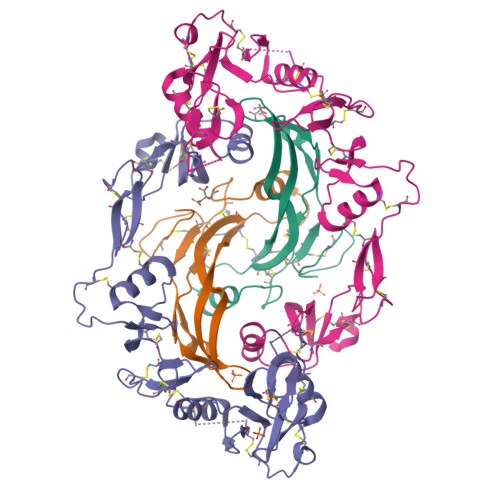
GDF-8 Myostatin Propeptide is a recombinant form of the endogenous inhibitor of myostatin (also known as Growth Differentiation Factor 8, GDF-8). Myostatin is a member of the TGF-B superfamily and functions as the primary negative regulator of skeletal muscle mass — it is essentially the "brake" on muscle growth. Myostatin is synthesized as a precursor protein that is cleaved into two fragments: the C-terminal mature myostatin dimer (the active ligand) and the N-terminal propeptide domain. Under normal physiology, the propeptide remains non-covalently bound to the mature myostatin dimer, keeping it in a latent, inactive complex. This propeptide-mediated inhibition is the body's primary mechanism for controlling myostatin activity.
The therapeutic concept is straightforward: by administering exogenous myostatin propeptide, additional myostatin molecules can be sequestered and inactivated, reducing the brake on muscle growth. This approach is inspired by the dramatic natural experiments observed in myostatin-null organisms: Belgian Blue cattle (which have a natural myostatin gene deletion) display extreme muscular hypertrophy ("double muscling"), and rare human cases of myostatin loss-of-function mutations show extraordinary muscle development. Multiple pharmaceutical companies have pursued anti-myostatin therapies, including antibodies (stamulumab/MYO-029, domagrozumab) and receptor decoys (ACE-031), though clinical results have been mixed — the degree of muscle mass increase in humans has been more modest than the dramatic animal models would suggest.
Clinical Context
Anti-myostatin therapy is one of the most actively pursued targets in muscle biology. The myostatin propeptide approach offers a more physiological strategy compared to antibodies or receptor decoys, as it recapitulates the body's own inhibitory mechanism. However, the clinical translation of myostatin inhibition has been challenging — human trials of various anti-myostatin approaches have shown modest muscle mass gains (typically 2-5%) rather than the dramatic effects seen in animal models. This may reflect the redundancy of TGF-B superfamily signaling (other ligands like activin A and GDF-11 can partially compensate) or differences in the dose/potency achievable with exogenous propeptide delivery.
- Myostatin inhibition has shown more modest effects in humans than animal models suggest — set realistic expectations
- TGF-B superfamily members have roles beyond muscle — potential off-target effects on cardiac tissue, bone metabolism, and reproductive function should be considered
- The propeptide approach is more physiological than antibodies or decoys but may have lower potency
- Contraindicated in patients with cardiac hypertrophy risk (myostatin also regulates cardiac muscle growth)
- No significant human safety data available — preclinical and early-phase data only
- Higher cost ($43.95/1mg) reflects the complexity of recombinant protein production
- The myostatin system has redundancy — complete inhibition is difficult to achieve and may not be necessary for meaningful effects
Research data sourced from UniProt. CC BY 4.0 — attribution required.
MedTech Research Group provides these references for informational purposes. We do not conduct original research. All studies are the work of their respective authors and institutions.
Biological Function
Acts specifically as a negative regulator of skeletal muscle growth
Subcellular Location
Secreted
Amino acid sequence length: 375 residues
Published Research
Published Research & Clinical Data
Peer-reviewed studies and clinical trial data related to GDF-8 / Myostatin Propeptide
All research below is conducted by independent institutions. MedTech Research Group provides these references for informational purposes only.
Research citations are being compiled for this compound.
Check back soon — our team is curating peer-reviewed sources.