HCG
HCG (Human Chorionic Gonadotropin)
Research Hub — Aggregated Studies
MedTech Research Group aggregates published research from peer-reviewed journals, clinical trials, and academic institutions. We do not conduct original research. All studies cited below are the work of their respective authors and institutions. Sources are linked for verification.
This product is classified as an FDA-regulated compound under the Federal Food, Drug, and Cosmetic Act (FD&C Act), as amended by the Drug Quality and Security Act (DQSA), Title I — Compounding Quality Act (2013).
MedTech Research Group will only fulfill orders for this compound to state-licensed 503A compounding pharmacies or FDA-registered 503B outsourcing facilities that maintain current registration with the U.S. Food and Drug Administration.
Verification Requirements
- Valid state pharmacy license (verified against state board of pharmacy records)
- Current state licensure (503A) or FDA registration (503B) verified via the appropriate state board of pharmacy or FDA Drug Establishment Registration database
- DEA registration (if applicable to the compound)
- Compliance with current Good Manufacturing Practice (cGMP) per 21 CFR Parts 210 and 211
This product may not be sold to consumers, wellness clinics, health stores, or any entity not licensed as a compounding pharmacy. Orders will not be fulfilled until licensure verification is complete. Ref: 21 U.S.C. §§ 353a, 353b; FDA Guidance for Industry: Mixing, Diluting, or Repackaging Biological Products (2025).
| Risk Tier | RED |
| Category | Sexual Health / Fertility |
| Subcategory | Gonadal Stimulation / Fertility |
| Pharmacological Class | Glycoprotein Hormone |
| Subclass | LH Analog / Gonadotropin |
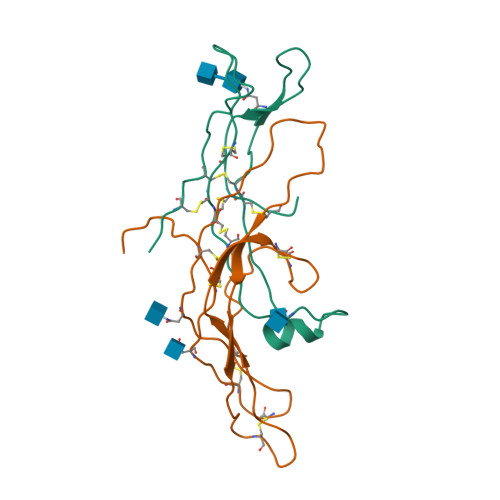
| Molecular Type | Heterodimeric glycoprotein (alpha and beta subunits, ~36.7 kDa; the alpha-subunit is shared with LH, FSH, and TSH) |
| Origin | Recombinant or purified from pregnant urine; endogenous HCG is produced by placental trophoblast cells during pregnancy |
| Regulatory Status | FDA-approved for multiple indications: prepubertal cryptorchidism, hypogonadotropic hypogonadism in males, ovulation induction in females (as part of ART protocols). Brand names include Pregnyl, Novarel, Ovidrel (choriogonadotropin alfa). |
| Route of Administration | Intramuscular injection, subcutaneous injection |
| Reconstitution | Lyophilized powder; reconstitute with bacteriostatic water |
| Storage | Refrigerate (2-8°C) before and after reconstitution |
Description
Human Chorionic Gonadotropin (HCG) is a heterodimeric glycoprotein hormone consisting of an α-subunit (92 amino acids, shared with LH, FSH, and TSH) and a β-subunit (145 amino acids, unique to HCG and responsible for its biological specificity). In pregnancy, HCG is produced by syncytiotrophoblast cells of the placenta and is the hormone detected by pregnancy tests. Its primary physiological role is to maintain the corpus luteum in early pregnancy, ensuring continued progesterone production until the placenta assumes this function (around 8–12 weeks gestation).
The therapeutic utility of HCG derives from its structural and functional homology with luteinizing hormone (LH). HCG binds to and activates the LH/CG receptor (LHCGR), the same receptor targeted by endogenous LH, but with significantly higher binding affinity and a much longer half-life (approximately 24–36 hours for HCG vs. 20 minutes for LH). This makes HCG a potent, long-acting LH analog. In males, LH/HCG receptor activation on Leydig cells in the testes stimulates testosterone biosynthesis through the steroidogenic pathway (cholesterol → pregnenolone → testosterone) and maintains spermatogenesis by supporting Sertoli cell function. In females, LH/HCG receptor activation on granulosa cells of mature ovarian follicles triggers ovulation and corpus luteum formation.
In clinical practice, HCG is widely used in three primary contexts: (1) fertility treatment in women (as the "trigger shot" in IVF and IUI protocols to induce ovulation of mature follicles); (2) male hypogonadism and testosterone replacement therapy (to maintain testicular function, spermatogenesis, and endogenous testosterone production during or after exogenous testosterone use); and (3) pediatric cryptorchidism (undescended testes) where the gonadotropic stimulation can promote testicular descent.
Clinical Context
HCG is one of the most well-established and widely prescribed hormones in reproductive medicine. In the context of male testosterone replacement therapy (TRT), HCG has become increasingly important as a concurrent therapy to prevent testicular atrophy and maintain fertility — exogenous testosterone suppresses LH via negative feedback, causing the testes to shrink and spermatogenesis to cease. Concurrent HCG administration (typically 500–1000 IU 2–3 times weekly) mimics LH stimulation and maintains testicular volume and sperm production. The 10,000 IU vial at $50.17 provides a cost-effective supply for multi-week dosing protocols.
- FDA-approved for multiple indications — extensive safety data spanning decades
- In males on TRT: typical adjunctive dose is 500-1000 IU SC/IM 2-3 times per week
- In IVF: trigger dose is typically 5,000-10,000 IU as a single injection to induce ovulation
- HCG can raise estradiol levels in males (testosterone to estradiol via aromatase in Leydig cells) — monitor E2 and consider aromatase inhibitor if needed
- Rare but serious: ovarian hyperstimulation syndrome (OHSS) in females — life-threatening if severe
- HCG is a glycoprotein, not a peptide — it is much larger and more complex than other products in this catalog
- Contraindicated in hormone-sensitive malignancies (prostate cancer, breast cancer)
- Long half-life (24-36 hours) means effects are sustained — do not dose more frequently than recommended
- Male gynecomastia is possible due to estradiol elevation — monitor and manage proactively
Research data sourced from UniProt. CC BY 4.0 — attribution required.
MedTech Research Group provides these references for informational purposes. We do not conduct original research. All studies are the work of their respective authors and institutions.
Biological Function
Beta subunit of the human chorionic gonadotropin (hCG). hCG is a complex glycoprotein composed of two glycosylated subunits alpha and beta which are non-covalently associated. The alpha subunit is identical to those in the pituitary gonadotropin hormones (LH, FSH and TSH). The beta subunits are distinct in each of the hormones and confer receptor and biological specificity. Has an essential role in pregnancy and maternal adaptation. Stimulates the ovaries to synthesize the steroids that are essential for the maintenance of pregnancy
Tissue Expression
High expression in the placenta throughout pregnancy
Subcellular Location
Secreted
Amino acid sequence length: 165 residues
Published Research
Published Research & Clinical Data
Peer-reviewed studies and clinical trial data related to HCG
All research below is conducted by independent institutions. MedTech Research Group provides these references for informational purposes only.
Research citations are being compiled for this compound.
Check back soon — our team is curating peer-reviewed sources.
74 Registered Clinical Trials
Research data sourced from ClinicalTrials.gov. Public domain (U.S. National Library of Medicine).
MedTech Research Group provides these references for informational purposes. We do not conduct original research. All studies are the work of their respective authors and institutions.
74
Total Trials
6
Recruiting
0
Active
43
Completed
Sponsor: The Egyptian IVF-ET Center · Completed: 2010-12
Sponsor: Dong-A Pharmaceutical Co., Ltd.
Sponsor: Hospital Universitario Dr. Jose E. Gonzalez · Completed: 2026-01-31
Sponsor: IBSA Institut Biochimique SA · Completed: 2019-08-02
Sponsor: Mohamed Ibrahem Eid · Completed: 2019-08
Research Library — 75,346 Papers
Research data sourced from OpenAlex. CC0 public domain. Articles are the work of their respective authors.
MedTech Research Group provides these references for informational purposes. We do not conduct original research. All studies are the work of their respective authors and institutions.
Biological roles of oligosaccharides: all of the theories are correct
Ajit Varki · Glycobiology
Research by Ajit Varki, published in Glycobiology. Not conducted by MedTech Research Group.
Vascular Endothelial Growth Factor: Basic Science and Clinical Progress
Napoleone Ferrara · Endocrine Reviews
Research by Napoleone Ferrara, published in Endocrine Reviews. Not conducted by MedTech Research Group.
2016 American Thyroid Association Guidelines for Diagnosis and Management of Hyperthyroidism and Other Causes of Thyrotoxicosis
Douglas S. Ross, Henry B. Burch, David S. Cooper, et al. · Thyroid
Research by Douglas S. Ross et al., published in Thyroid. Not conducted by MedTech Research Group.
Longitudinal Effects of Aging on Serum Total and Free Testosterone Levels in Healthy Men
S. Mitchell Harman, E. Jeffrey Metter, Jordan D. Tobin, et al. · The Journal of Clinical Endocrinology & Metabolism
Research by S. Mitchell Harman et al., published in The Journal of Clinical Endocrinology & Metabolism. Not conducted by MedTech Research Group.
2017 Guidelines of the American Thyroid Association for the Diagnosis and Management of Thyroid Disease During Pregnancy and the Postpartum
Erik K. Alexander, Elizabeth N. Pearce, Gregory A. Brent, et al. · Thyroid
Research by Erik K. Alexander et al., published in Thyroid. Not conducted by MedTech Research Group.
Biological roles of glycans
Ajit Varki · Glycobiology
Research by Ajit Varki, published in Glycobiology. Not conducted by MedTech Research Group.
Incidence of Early Loss of Pregnancy
Allen J. Wilcox, Clarice R. Weinberg, John F. O’Connor, et al. · New England Journal of Medicine
Research by Allen J. Wilcox et al., published in New England Journal of Medicine. Not conducted by MedTech Research Group.
Endocrine Treatment of Gender-Dysphoric/Gender-Incongruent Persons: An Endocrine Society* Clinical Practice Guideline
Wylie C. Hembree, Peggy T. Cohen‐Kettenis, Louis Gooren, et al. · The Journal of Clinical Endocrinology & Metabolism
Research by Wylie C. Hembree et al., published in The Journal of Clinical Endocrinology & Metabolism. Not conducted by MedTech Research Group.
Sensitive optical biosensors for unlabeled targets: A review
Xudong Fan, Ian M. White, S. I. Shopova, et al. · Analytica Chimica Acta
Research by Xudong Fan et al., published in Analytica Chimica Acta. Not conducted by MedTech Research Group.
Aptamers: An Emerging Class of Molecules That Rival Antibodies in Diagnostics
Sumedha D. Jayasena · Clinical Chemistry
Research by Sumedha D. Jayasena, published in Clinical Chemistry. Not conducted by MedTech Research Group.