IGF-1 LR3
Research Hub — Aggregated Studies
MedTech Research Group aggregates published research from peer-reviewed journals, clinical trials, and academic institutions. We do not conduct original research. All studies cited below are the work of their respective authors and institutions. Sources are linked for verification.
This product is designated FOR RESEARCH USE ONLY (RUO). These compounds have not been approved or cleared under 21 U.S.C. § 505 and have not been evaluated by the FDA for safety, efficacy, or labeling for clinical, diagnostic, or therapeutic use in humans or animals.
MedTech Research Group will only fulfill orders to qualified researchers affiliated with accredited academic institutions, licensed research facilities, or organizations with active IRB/IACUC oversight.
Purchaser Restrictions
- Purchaser must be a qualified researcher at an accredited institution or licensed research facility
- This product may not be sold or redistributed to individual consumers, wellness clinics, health food stores, or retail establishments
- Not intended for human or animal consumption, diagnostic use, or therapeutic application
- Institutional affiliation and research purpose will be verified prior to order fulfillment
Distribution is limited to qualified research use in compliance with applicable federal and state law. These products bear the "For Research Use Only" designation per FDA labeling requirements (minimum 10 pt. font). Ref: 21 U.S.C. § 505; FD&C Act § 201(p) (unapproved new drug definition).
| Risk Tier | YELLOW |
| Category | Growth Factors |
| Subcategory | Insulin-Like Growth Factor Analog |
| Pharmacological Class | Modified Peptide Growth Factor |
| Subclass | Long-Acting IGF-1 Analog |
| Molecular Type | Recombinant Modified Peptide (83 amino acids — IGF-1 with Arg3 substitution and 13-AA N-terminal extension) |
| Origin | Synthetic recombinant — modified form of endogenous IGF-1 |
| Regulatory Status | Research Use Only. Not FDA-approved. Mecasermin (unmodified rhIGF-1) is FDA-approved as Increlex for severe primary IGF-1 deficiency. |
| Route of Administration | Subcutaneous injection, intramuscular injection |
| Reconstitution | Lyophilized powder; reconstitute with bacteriostatic water (use gentle swirling, not shaking — growth factors are sensitive to denaturation) |
| Storage | Refrigerate (2-8°C); avoid freeze-thaw cycles |
Description
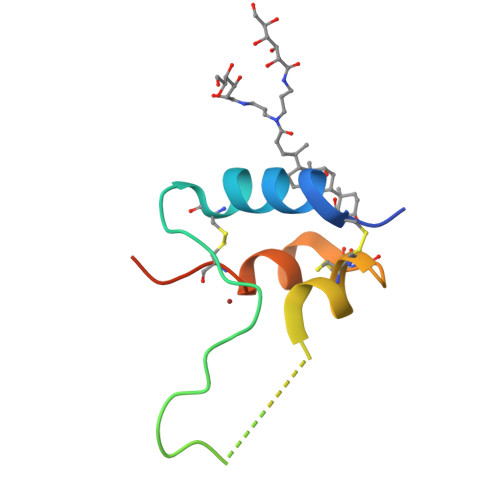
IGF-1 LR3 (Insulin-like Growth Factor 1, Long Arg3) is a modified form of human insulin-like growth factor 1 engineered for dramatically extended biological activity compared to the native 70-amino-acid IGF-1 molecule. Two modifications define the LR3 variant: first, a 13-amino-acid N-terminal extension peptide (MFPAMPLSSLFVN) that reduces binding to IGF-binding proteins; second, an arginine substitution at position 3 (Glu3 to Arg3) that further disrupts IGFBP binding. Together, these modifications reduce the affinity of IGF-1 LR3 for the six major IGF-binding proteins (IGFBP-1 through IGFBP-6) by approximately 100-fold. Since more than 99% of circulating native IGF-1 is bound to IGFBPs (primarily the ternary complex of IGFBP-3, acid-labile subunit, and IGF-1), this dramatically reduced binding means that IGF-1 LR3 circulates predominantly in its free, bioactive form.
The result is a molecule with approximately 2-3 times the potency and a significantly longer functional half-life compared to native IGF-1. IGF-1 LR3 activates the IGF-1 receptor (IGF-1R), a receptor tyrosine kinase that signals through the PI3K/Akt/mTOR and Ras/MAPK pathways to drive cell proliferation, differentiation, survival (anti-apoptosis), protein synthesis, and glucose uptake. These effects are anabolic and mitogenic across virtually all tissue types — muscle, bone, cartilage, nerve, and epithelial tissue.
Clinical Context
IGF-1 LR3 is a potent growth factor that operates downstream of GH — rather than stimulating GH release from the pituitary (like GHRH analogs and GHS compounds), it directly activates IGF-1 receptors on target tissues. This means it does not require a functional pituitary gland and its effects are independent of GH. However, this also means it bypasses all the feedback regulation that normally governs the GH/IGF-1 axis, which carries inherent risks. The most significant clinical concern is hypoglycemia — IGF-1R and the insulin receptor share structural homology and downstream signaling, and IGF-1 LR3 can produce insulin-like effects on glucose metabolism, particularly at higher doses.
- HYPOGLYCEMIA RISK: IGF-1 LR3 can cause significant hypoglycemia, particularly at higher doses or when combined with insulin or insulin sensitizers — monitor blood glucose closely
- Bypasses normal GH/IGF-1 feedback regulation — there is no physiological 'brake' on its activity
- Potent mitogenic activity raises theoretical concerns regarding tumor promotion (IGF-1R is overexpressed in many cancers); contraindicated in patients with known or suspected malignancy
- Reconstitute gently (swirl, do not shake) — growth factors are prone to denaturation and aggregation
- Available in two sizes: 0.1mg ($20.46) for micro-dosing or pilot studies, and 1mg ($69.18) for standard research protocols
- The dose range used in research is typically 20-50mcg per day; the 1mg vial provides a multi-week supply at standard research doses
- Do not confuse with native IGF-1 (mecasermin/Increlex) — IGF-1 LR3 has fundamentally different pharmacokinetics due to reduced IGFBP binding
Research data sourced from UniProt. CC BY 4.0 — attribution required.
MedTech Research Group provides these references for informational purposes. We do not conduct original research. All studies are the work of their respective authors and institutions.
Subcellular Location
Secreted
Amino acid sequence length: 130 residues
Published Research
Published Research & Clinical Data
Peer-reviewed studies and clinical trial data related to IGF-1 LR3
All research below is conducted by independent institutions. MedTech Research Group provides these references for informational purposes only.
Research citations are being compiled for this compound.
Check back soon — our team is curating peer-reviewed sources.