IGF-DES
Research Hub — Aggregated Studies
MedTech Research Group aggregates published research from peer-reviewed journals, clinical trials, and academic institutions. We do not conduct original research. All studies cited below are the work of their respective authors and institutions. Sources are linked for verification.
This product is designated FOR RESEARCH USE ONLY (RUO). These compounds have not been approved or cleared under 21 U.S.C. § 505 and have not been evaluated by the FDA for safety, efficacy, or labeling for clinical, diagnostic, or therapeutic use in humans or animals.
MedTech Research Group will only fulfill orders to qualified researchers affiliated with accredited academic institutions, licensed research facilities, or organizations with active IRB/IACUC oversight.
Purchaser Restrictions
- Purchaser must be a qualified researcher at an accredited institution or licensed research facility
- This product may not be sold or redistributed to individual consumers, wellness clinics, health food stores, or retail establishments
- Not intended for human or animal consumption, diagnostic use, or therapeutic application
- Institutional affiliation and research purpose will be verified prior to order fulfillment
Distribution is limited to qualified research use in compliance with applicable federal and state law. These products bear the "For Research Use Only" designation per FDA labeling requirements (minimum 10 pt. font). Ref: 21 U.S.C. § 505; FD&C Act § 201(p) (unapproved new drug definition).
| Risk Tier | YELLOW |
| Category | Growth Factors |
| Subcategory | Truncated Insulin-Like Growth Factor |
| Pharmacological Class | Peptide Growth Factor |
| Subclass | Short-Acting Localized IGF-1 Variant |
| Molecular Type | Truncated Recombinant Peptide (67 amino acids — IGF-1 missing the first 3 N-terminal amino acids) |
| Origin | Naturally occurring IGF-1 variant found in brain tissue; produced recombinantly |
| Regulatory Status | Research Use Only. Not FDA-approved. |
| Route of Administration | Subcutaneous injection (localized, site-specific) |
| Reconstitution | Lyophilized powder; reconstitute with bacteriostatic water |
| Storage | Refrigerate (2-8°C) |
Description
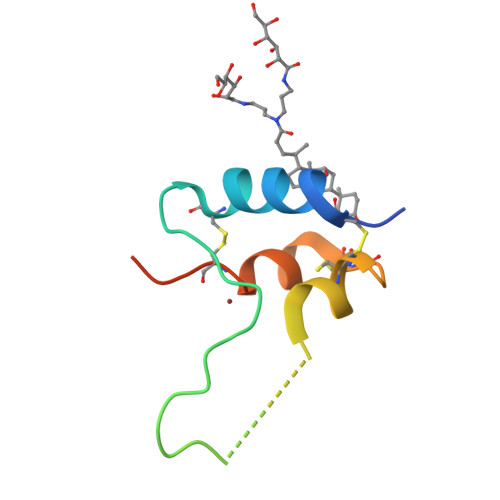
IGF-DES (Des(1-3) IGF-1, also known as IGF-1 DES) is a naturally occurring truncated variant of insulin-like growth factor 1 that is missing the first three N-terminal amino acids (Gly-Pro-Glu). This truncation was originally identified in human brain tissue and colostrum. The removal of these three residues has a profound pharmacological consequence: it virtually eliminates binding to all six IGF-binding proteins (IGFBPs), even more dramatically than the LR3 modification. This means IGF-DES exists almost entirely in the free, unbound, bioactive form — making it approximately 10 times more potent than native IGF-1 at the IGF-1 receptor on a molar basis.
However, the complete loss of IGFBP binding is a double-edged sword: while it increases acute potency dramatically, it also eliminates the stabilizing effect of IGFBP binding on circulating half-life. Native IGF-1 bound to IGFBPs has a half-life of 12-16 hours, while IGF-DES has a half-life of only 20-30 minutes. This ultra-short half-life fundamentally changes how IGF-DES is used compared to IGF-1 LR3: rather than systemic, sustained IGF-1R activation, IGF-DES produces intense but brief, localized activation at and near the injection site. This makes it primarily useful for site-specific applications where concentrated IGF-1R signaling is desired in a targeted tissue area.
Clinical Context
IGF-DES is a specialized tool within the growth factor arsenal, positioned as a complement rather than a replacement for IGF-1 LR3. Where IGF-1 LR3 provides sustained, systemic IGF-1R activation, IGF-DES provides intense, localized, short-duration activation. The very short half-life means systemic exposure is minimal, which may reduce the risk of systemic side effects (particularly hypoglycemia) compared to IGF-1 LR3, but it also means the window of biological activity is narrow. Research use typically involves injection directly into or near the target tissue.
- Ultra-short half-life (20-30 minutes) — effects are localized and transient
- Much higher acute potency than native IGF-1 or IGF-1 LR3 at the injection site
- Systemic hypoglycemia risk is lower than IGF-1 LR3 due to rapid clearance, but still present at higher doses
- Site-specific injection is the primary use paradigm — inject at or near the target tissue
- Very small vial size (0.1mg = 100mcg) reflects the high potency and localized use pattern
- Same mitogenic/tumor promotion concerns as all IGF-1 variants — contraindicated with known malignancy
- Reconstitute gently; growth factors are fragile
Research data sourced from UniProt. CC BY 4.0 — attribution required.
MedTech Research Group provides these references for informational purposes. We do not conduct original research. All studies are the work of their respective authors and institutions.
Subcellular Location
Secreted
Amino acid sequence length: 130 residues
Published Research
Published Research & Clinical Data
Peer-reviewed studies and clinical trial data related to IGF-DES
All research below is conducted by independent institutions. MedTech Research Group provides these references for informational purposes only.
Research citations are being compiled for this compound.
Check back soon — our team is curating peer-reviewed sources.