TB500
Thymosin Beta 4 / TB500
Research Hub — Aggregated Studies
MedTech Research Group aggregates published research from peer-reviewed journals, clinical trials, and academic institutions. We do not conduct original research. All studies cited below are the work of their respective authors and institutions. Sources are linked for verification.
This product is designated FOR RESEARCH USE ONLY (RUO). These compounds have not been approved or cleared under 21 U.S.C. § 505 and have not been evaluated by the FDA for safety, efficacy, or labeling for clinical, diagnostic, or therapeutic use in humans or animals.
MedTech Research Group will only fulfill orders to qualified researchers affiliated with accredited academic institutions, licensed research facilities, or organizations with active IRB/IACUC oversight.
Purchaser Restrictions
- Purchaser must be a qualified researcher at an accredited institution or licensed research facility
- This product may not be sold or redistributed to individual consumers, wellness clinics, health food stores, or retail establishments
- Not intended for human or animal consumption, diagnostic use, or therapeutic application
- Institutional affiliation and research purpose will be verified prior to order fulfillment
Distribution is limited to qualified research use in compliance with applicable federal and state law. These products bear the "For Research Use Only" designation per FDA labeling requirements (minimum 10 pt. font). Ref: 21 U.S.C. § 505; FD&C Act § 201(p) (unapproved new drug definition).
| Risk Tier | YELLOW |
| Category | Recovery / Healing |
| Subcategory | Tissue Repair, Anti-Inflammatory, Cell Migration |
| Pharmacological Class | Peptide |
| Subclass | Actin-Sequestering Peptide / Thymic Peptide |
| Molecular Type | Synthetic Peptide (43 amino acids) |
| Origin | Synthetic version of endogenous Thymosin Beta 4 — the most abundant member of the beta-thymosin family, found in nearly all nucleated cells |
| Regulatory Status | Research Use Only. Not FDA-approved. Investigational drug status in some wound healing and cardiac applications. |
| Route of Administration | Subcutaneous injection, intramuscular injection |
| Reconstitution | Lyophilized powder; reconstitute with bacteriostatic water |
| Storage | Refrigerate (2-8°C) |
Description
Thymosin Beta 4 (Tb4), sold commercially as TB500, is a 43-amino-acid peptide that is one of the most abundant and ubiquitous intracellular peptides in the human body. It is present in virtually all tissues and cell types except red blood cells, with particularly high concentrations in platelets, wound fluid, and developing tissues. Thymosin Beta 4 was originally isolated from the thymus gland (hence the "thymosin" name), but it is now known to be produced throughout the body and plays a fundamental role in cell biology far beyond immune function.
The primary intracellular function of Thymosin Beta 4 is sequestration of G-actin (globular actin monomers), regulating the polymerization of actin into F-actin (filamentous actin) and thereby controlling the cytoskeletal dynamics that underlie cell motility, migration, and morphogenesis. When tissue injury occurs, Thymosin Beta 4 is released from platelets and damaged cells into the extracellular environment, where it acts as a powerful signaling molecule. Extracellularly, TB4 promotes cell migration (particularly of keratinocytes, endothelial cells, and progenitor/stem cells to the wound site), stimulates angiogenesis, reduces inflammation by downregulating pro-inflammatory cytokines (including NFkB-mediated inflammatory pathways), reduces apoptosis in damaged tissue, and promotes hair follicle growth by activating follicular stem cells.
In cardiac research, Thymosin Beta 4 has been one of the most promising molecules studied for myocardial repair following ischemic injury (heart attack). Studies have demonstrated that TB4 can activate epicardial progenitor cells, stimulate formation of new cardiomyocytes, reduce scar formation (fibrosis), and improve cardiac function after experimental myocardial infarction. These findings led to clinical investigations, though results have been mixed in translation from animal models to human outcomes.
Clinical Context
TB500 is the second most popular recovery peptide (after BPC-157) and is frequently combined with BPC-157 in the Wolverine Blend. While BPC-157 and TB500 are both categorized as "recovery" peptides, they work through entirely different mechanisms: BPC-157 primarily acts through growth factor receptor upregulation and the nitric oxide system, while TB500 acts through actin dynamics and stem/progenitor cell mobilization. This mechanistic complementarity is the rationale for combination use.
- Generally well-tolerated in animal studies and early clinical investigations
- No significant adverse effects reported in animal models at standard research doses
- Unlike BPC-157, TB500 is NOT orally bioavailable — must be administered by injection
- Has been banned by the World Anti-Doping Agency (WADA) and is a prohibited substance in horse racing due to its tissue repair properties
- Theoretical concern: as a promoter of angiogenesis and cell proliferation, use should be approached cautiously in the context of existing neoplasms
- Extracellular TB4 fragments (including the active fragment Ac-SDKP, which is generated by enzymatic cleavage) may contribute to some of the observed effects
Research data sourced from UniProt. CC BY 4.0 — attribution required.
MedTech Research Group provides these references for informational purposes. We do not conduct original research. All studies are the work of their respective authors and institutions.
Biological Function
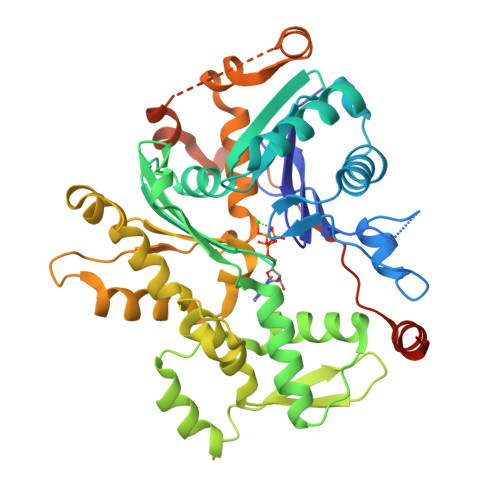
Plays an important role in the organization of the cytoskeleton. Binds to and sequesters actin monomers (G actin) and therefore inhibits actin polymerization
Subcellular Location
Cytoplasm, cytoskeleton
Amino acid sequence length: 63 residues
Published Research
Published Research & Clinical Data
Peer-reviewed studies and clinical trial data related to TB500
All research below is conducted by independent institutions. MedTech Research Group provides these references for informational purposes only.
Research citations are being compiled for this compound.
Check back soon — our team is curating peer-reviewed sources.
13 Registered Clinical Trials
Research data sourced from ClinicalTrials.gov. Public domain (U.S. National Library of Medicine).
MedTech Research Group provides these references for informational purposes. We do not conduct original research. All studies are the work of their respective authors and institutions.
13
Total Trials
1
Recruiting
0
Active
8
Completed
Sponsor: Beijing Northland Biotech. Co., Ltd. · Completed: 2019-07-26
Sponsor: Michigan Cornea Consultants, PC · Completed: 2012-12
Sponsor: ReGenTree, LLC · Completed: 2009-02
Sponsor: Hudson Biotech · Completed: 2028-02-17
Sponsor: RegeneRx Biopharmaceuticals, Inc. · Completed: 2009-01
Research Library — 6 Papers
Research data sourced from OpenAlex. CC0 public domain. Articles are the work of their respective authors.
MedTech Research Group provides these references for informational purposes. We do not conduct original research. All studies are the work of their respective authors and institutions.
Utilizing Developmentally Essential Secreted Peptides Such as Thymosin Beta-4 to Remind the Adult Organs of Their Embryonic State—New Directions in Anti-Aging Regenerative Therapies
Klaudia Maar, Roland Hetényi, Szabolcs Maar, et al. · Cells
Research by Klaudia Maar et al., published in Cells. Not conducted by MedTech Research Group.
Novel wellbeing and repair peptide use in the UK: Netnographic findings
Luke A. Turnock, Evelyn Hearne · Performance Enhancement & Health
Research by Luke A. Turnock et al., published in Performance Enhancement & Health. Not conducted by MedTech Research Group.
NANOCARRIER-BASED APPROACHES FOR ENHANCED MANAGEMENT OF ANDROGENETIC ALOPECIA: ADVANCEMENTS AND FUTURE PROSPECTS
Pritam Kayal, R. RAGHUL, UDAYA KIRAN SAHOO, et al. · International Journal of Applied Pharmaceutics
Research by Pritam Kayal et al., published in International Journal of Applied Pharmaceutics. Not conducted by MedTech Research Group.
Equine Doping Controls of Thymosin β4: A Population Study and Strategy for Misuse Detection
Vivian Delcourt, Patrice Garcia, Benjamin Chabot, et al. · Drug Testing and Analysis
Research by Vivian Delcourt et al., published in Drug Testing and Analysis. Not conducted by MedTech Research Group.
Thymosin Beta-4 2 mg/vial músculo edificio péptidos tb500 CAS 77591-33-4
Neydeli Ayala-Mendivil, Georgina Sandoval
Research by Neydeli Ayala-Mendivil et al.. Not conducted by MedTech Research Group.
Injuries, Injections, and Internet Forums: A Qualitative Study of Reddit User Perspectives on Peptide Therapy After Orthopaedic Surgery
Ashley E. Rosenberg, Bennett Taylor, Rhea Rasquinha, et al. · Sports Health A Multidisciplinary Approach
Research by Ashley E. Rosenberg et al., published in Sports Health A Multidisciplinary Approach. Not conducted by MedTech Research Group.